Servet Ulaş, digital artist and Weina Jin, digital health professional will join the Pain Studies Lab in Fall, 2015. Servet Ulaş is a Ph.D. graduate student from Istanbul, Turkey. He received his M.A. degree in Visual Communication Design from Sabanci University, under supervision of Dr. Elif Ayiter. He has industry experience as a digital art director in the advertising sector and more recently as an augmented reality creative developer. His research interests are in the areas of interaction design, game design, physical computing and bodily interaction. Weina is currently pursuing M.Sc. under the supervision of Dr.Diane Gromala. She holds a Doctor of Medicine (MD) degree from Peking University. Before joining the Pain Lab, she received two-years’ neurology residency training in Peking University First Hospital. She has also designed physician-patient communication application in a mobile health startup and is the founder of a non-profit medical website. Her research interests are in developing health-related VR, serious game and HCI.
Xin Tong (game designer and developer), together with Amber Choo (game designer and artist), graduate students at Pain Studies Lab, released their App called FitPet designed for providing motivations for more physical activities. The idea is to convert the users health data grabbed by the mobile devices accelerometer (steps) into game coins, where you will need to keep your virtual pet healthy and grow up by feeding food, providing first aid, and play games with your pet. So users need to take care of their pet by taking care of their physical activities. This gamification approach was designed to promote more steps and awareness towards walking in daily routine for users who are lack of motivations and activities.
This is part of Xin Tongs Msc thesis research prototype. She is currently conducting a six-week long-term user study with 23 participants to validate her research proposal and hypothesis. Users need to set their daily activity goals and try to keep their pet in a good condition by completing goals. For more information, please contact Xin at tongxint@sfu.ca. App for iPhone is still under review process but is coming soon. Download the App to your Android phone from here: https://play.google.com/store/apps/details?id=xinAmber.FitPet.fitpet




Prof. Gromala, Prof Shaw, and Xin Tong showcased the Pain Studies Labs latest VR project and presented a research paper at this year’s SPIE VR conference in San Francisco. The conference is one of the important Virtual Reality conferences for scientists and artists.
Mobius Floe, a Virtual Reality game designed for pain distraction, was demonstrated in the exhibition session, attracting long lines of participants. In the paper presentation session, Xin presented the collaborative paper about Body Image Body Schema (BIBS) and Virtual Reality. In the paper, Pain Lab researchers Tong, Gromala, Williamson, Shaw and Ischen discussed the relationship between BIBS and VR, and its design implications for VR researchers.
[Paper Published]
Xin Tong, Diane Gromala, Owen Williamson, Chris Shaw, Ozgun Eylul Iscen (2015). Theory Review and Interaction Design Space of Body Image and Body Schema (BIBS) for Embodied Cognition in Virtual Reality,” in IS&T/SPIE Electronic Imaging 2015: The Engineering Reality of Virtual Reality. Vol. Number: 9013. Expected Date of Publication: 1 March 2015. (12 pages)
Xin Tong was the recently recipient of the Design Principles and Practices’ Graduate Scholar Award. This award is annually given to outstanding graduate students from around the world. Recipients of this years award are from Brazil, Canada, Columbia, England, Japan and the United States. Graduate Scholars perform a critical role in the annual conference by chairing the parallel sessions and presenting their own research papers.
Xin’s paper, “Experience and Practice: Body Image and Body Schema for Embodied Cognition in Human Computer Interaction Design,” was written in collaboration with her Senior Supervisor, Dr. Diane Gromala. This work combines their experiences with patients in pain clinics and research results from SFU’s School of Interactive Arts and Technology’s Pain Studies Lab.
Dimple Gupta joined Simon Fraser University’s School of Interactive Arts and Technology as a graduate student in Summer 2014. Dimple is a Licensed Clinical Social Worker (in California, United States) and a Registered Social Worker (in British Columbia, Canada), specializing in mental health social services program design and delivery, psychotherapy and health communications. She holds a Masters degree in Social Work from San Jose State University and and brings over 10 years of experience with direct patient care, program implementation, development, compliance, and public relations experience with Silicon Valley health services agencies and the government sector in India. Her research interests include technology in organizational development, human computer interaction, and developing computational technology based treatment interventions to treat chronic pain and mental health world-wide.
Mahsoo Salimi joined Simon Fraser University’s School of Interactive Arts and Technology as a graduate student in Fall 2014. Mahsoo is an architect and holds a Masters degree in Architecture from University of Colorado. She has worked at Terreform ONE under the supervision of Dr. Mitchel Joachim and Maria Aiolova and she was also a visiting scholar at Prof. Nikolaus Correll Lab at the University of Colorado (Computer Science Department). Her current research interests include Responsive and Interactive Interfaces in Architecture, Biomimetics, Human Computer Interaction, Immersion and Tangible Media, Robotics, Smart Materials and Synthetic Biology.
Dimple Gupta joined Simon Fraser University’s School of Interactive Arts and Technology as a graduate student in Summer 2014. Dimple is a Licensed Clinical Social Worker (in California, United States) and a Registered Social Worker (in British Columbia, Canada), specializing in mental health social services program design and delivery, psychotherapy and health communications. She holds a Masters degree in Social Work from San Jose State University and and brings over 10 years of experience with direct patient care, program implementation, development, compliance, and public relations experience with Silicon Valley health services agencies and the government sector in India. Her research interests include technology in organizational development, human computer interaction, and developing computational technology based treatment interventions to treat chronic pain and mental health world-wide.
Mahsoo Salimi joined Simon Fraser University’s School of Interactive Arts and Technology as a graduate student in Fall 2014. Mahsoo is an architect and holds a Masters degree in Architecture from University of Colorado. She has worked at Terreform ONE under the supervision of Dr. Mitchel Joachim and Maria Aiolova and she was also a visiting scholar at Prof. Nikolaus Correll Lab at the University of Colorado (Computer Science Department). Her current research interests include Responsive and Interactive Interfaces in Architecture, Biomimetics, Human Computer Interaction, Immersion and Tangible Media, Robotics, Smart Materials and Synthetic Biology.
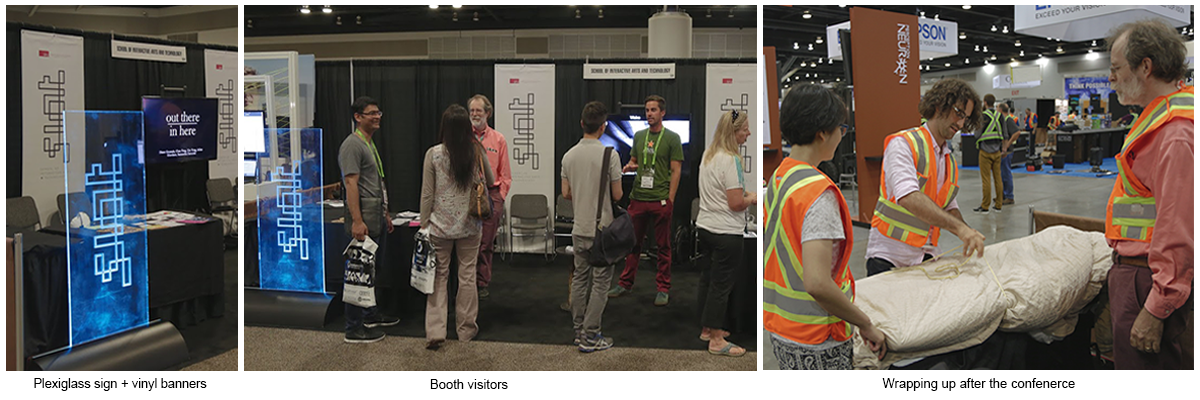
A new design researcher, Jeewon LEE recently joined the Pain lab. She and Chao Feng worked as a team to prepare SIATs banners at SIGGRAPH 2014. The design team first designed the banners in Illustrator and sent the data to manufacturers for plexiglass engraving and printing on long vinyl banners. The plexiglass sign grabbed people’s attention and invited them to our booth.
PhD student, Mark Nazemi was recently awarded the McQuarrie Hunter Graduate Student Scholarship for his chronic pain research. This is the first time that the award was offered at Simon Fraser University for funding research in chronic pain.
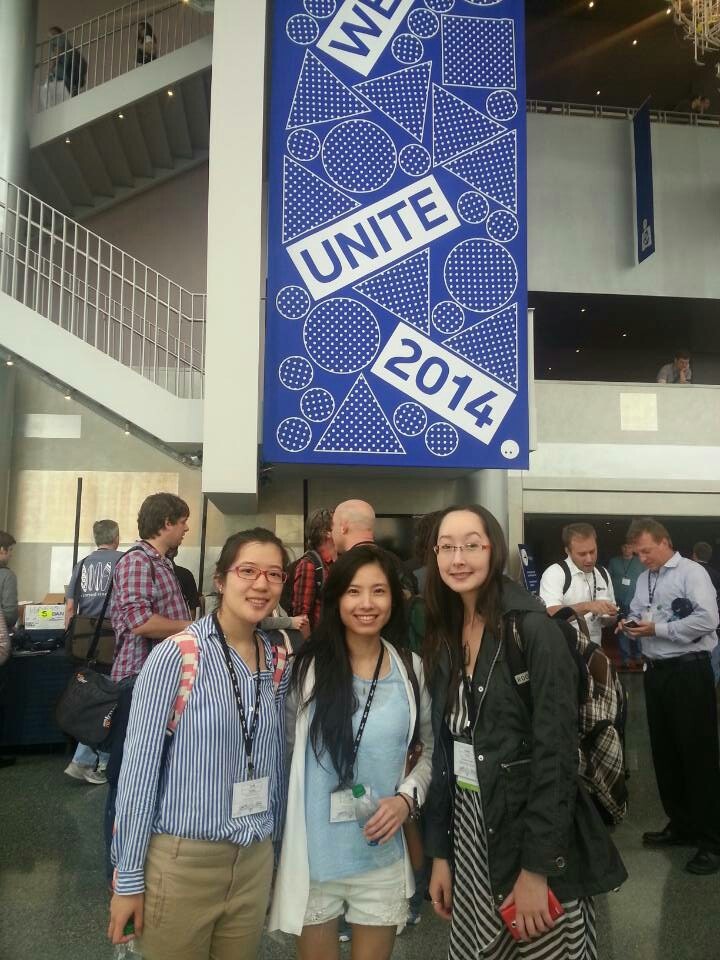
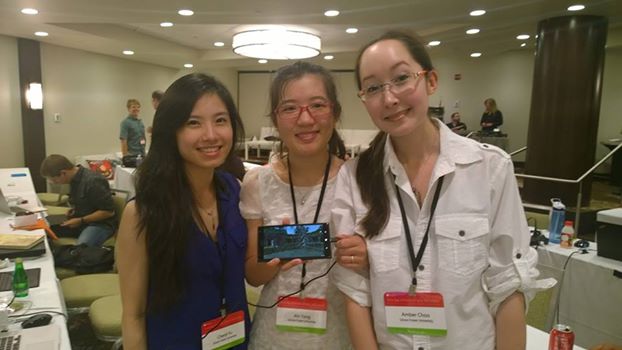
Graduate students Amber Choo and Xin Tong, along with FCATs Undergraduate Research Fellow Cheryl Yu, won two awards at the Unite 2014 Conference in Seattle. Their two-dimensional boardgame – Aztec Treasures – was voted Best Game in the Unity & Windows Training and Porting Lab. Microsofts Surface devices were part of the award. Choo, Tong and Yu, who are Research Assistants in the Pain Studies Lab at Simon Fraser University in Canada, also snagged the Microsoft Surface Award for successfully porting three Virtual Reality (VR) games and one 2D boardgame to Windows phone online application store. Each received a Microsoft Nokia Lumia 1520 cell phone. According to the Pain Studies Lab founder and director, Dr. Diane Gromala, the immersive VR games were developed for patients who live with neuropathic or chronic pain to potentially help them manage this disease, as their early research results indicate. The board game was originally designed in SIATs graduate class in video game design. The UNITE conference attracted well over 1,000 attendees.
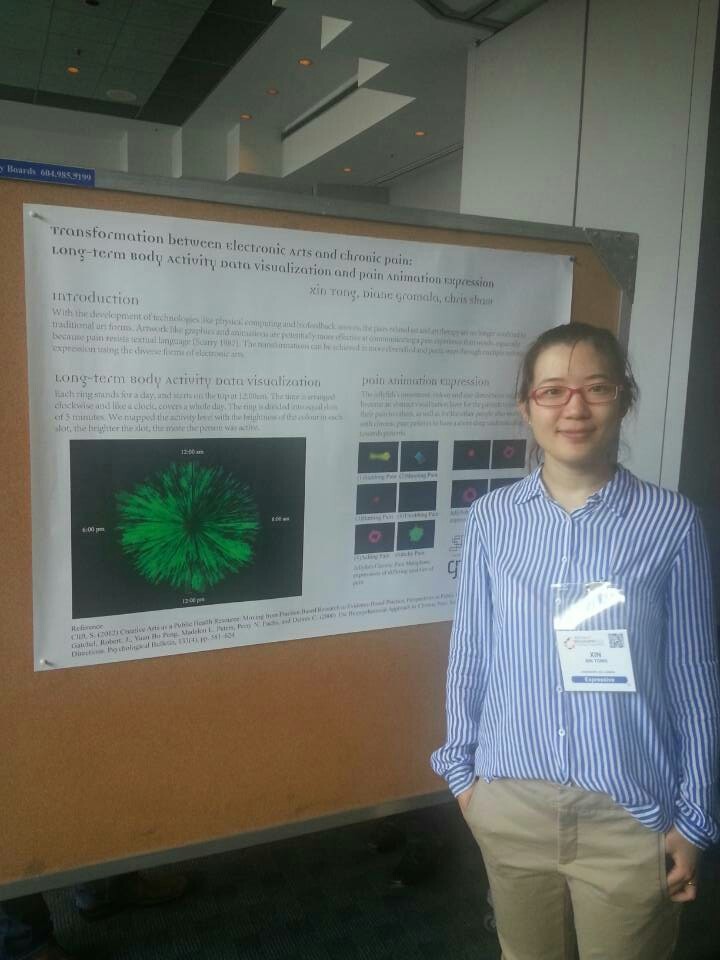
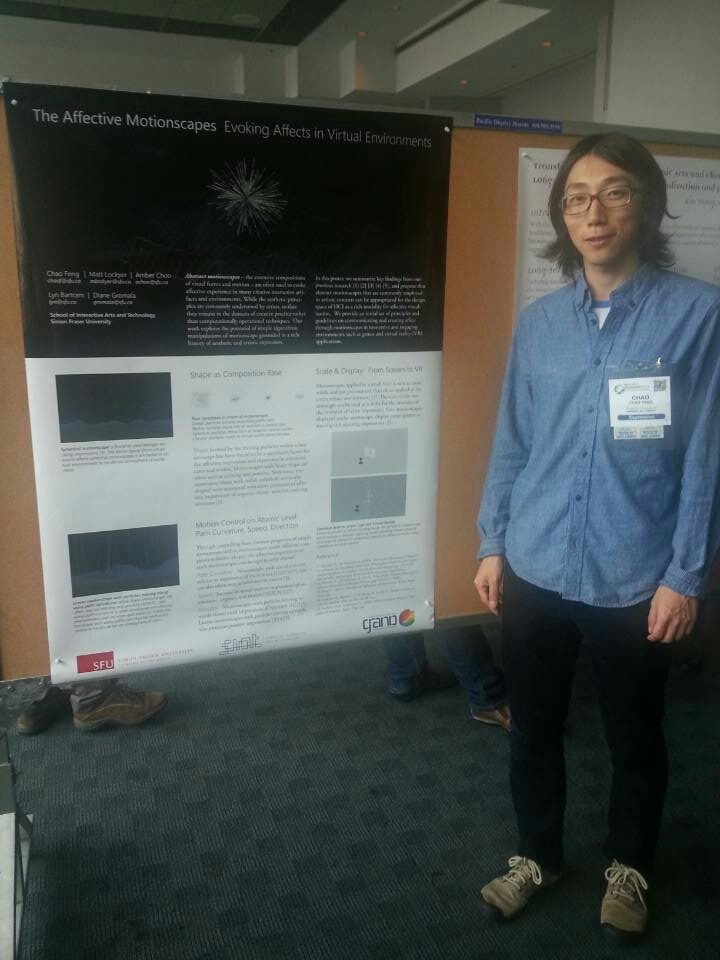
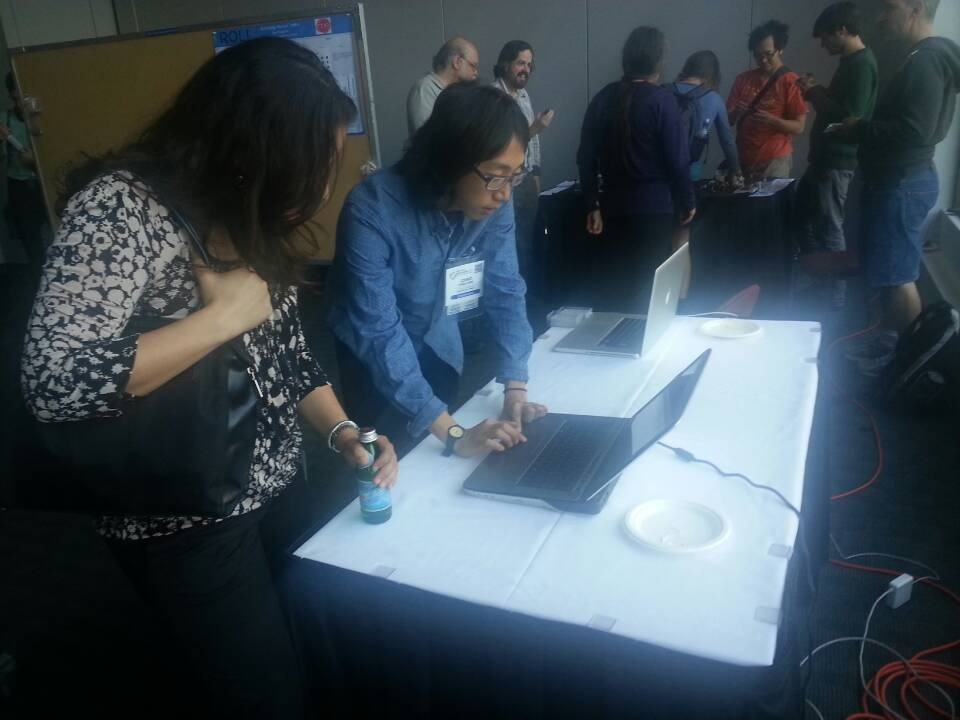
Both Xin Tong and Chao Feng who are graduate students in Pain Studies Lab presented two posters at co-located venues SIGGRAPH/Expressive/Computational Aesthetics 2014. Xins poster presented her new pain expression visualization design and pain patients activity data visualization. Chaos poster presented part of his thesis research affective space visualizations. The posters represented the latest studies conducted at the Pain Studies Lab about pain visualizations and personal pain data analytics.
SIGGRAPH is one the most prestigious venues for showcasing breakthroughs in practices and production in Computer Graphics and Interactive Techniques. Computational Aesthetics is one of SIGGRAPHs co-located venues that bridges the analytic and synthetic by integrating aspects of computer science, philosophy, psychology, and the fine, applied & performing arts.